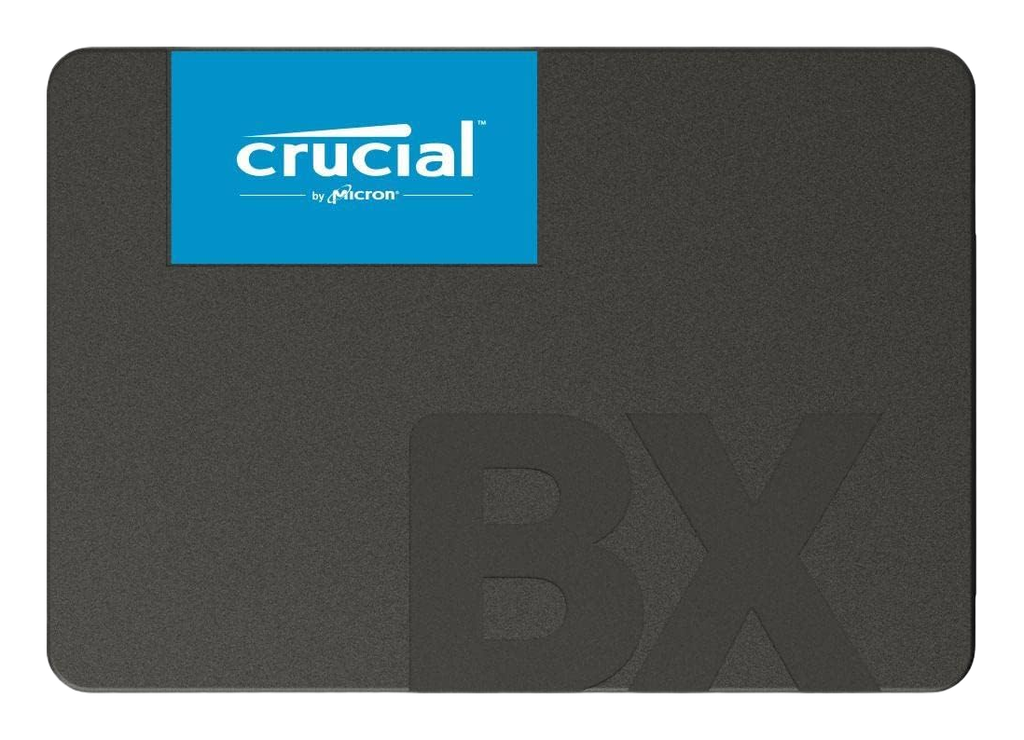
Crucial BX500 480GB
480GB · 2.5" · SATA III
Specifications
No
DRAM cache
540 MB/s
Sequential read
500 MB/s
Sequential write
120 TBW
Endurance
Family guide
Crucial SATA SSDs| MX500 | BX500 This model | |
|---|---|---|
| Released | 2017 | 2018 |
| Interface | Not available | SATA III |
| Read | Not available | 540 MB/s |
| Write | Not available | 500 MB/s |
| Endurance | Not available | 120 TBW |
| Summary | Has a DRAM cache and TLC flash, unlike the DRAM-less BX500. | DRAM-less, and its flash varies by capacity and batch, from TLC to slower QLC. |
Capacity grid
| 120GB | 240GB | 250GB | 480GB | 500GB | 960GB | 1TB | 2TB | 4TB | |
|---|---|---|---|---|---|---|---|---|---|
| MX500 | Not available | Not available | $248.95 | Not available | $197.99 | Not available | No listings | Out of stock | Out of stock |
| BX500 | $149.57 | $89 | Not available | $254.94 This model | $169 | Out of stock | $210 | $379 | $779 |
Price history
$400$300$200$100$0
22 Apr06 Jun22 Jul06 Sept22 Oct
Price history excludes Amazon sources
Affiliate link disclosure: some product links on this page may be affiliate links. If you click on these links and make a purchase, we may earn a commission. This doesn't affect the price you pay or influence which listings are displayed.
Listings
Listings sorted by Price, ascending.