Nvidia GeForce RTX 5060 Ti 8GB
Released 2025/04
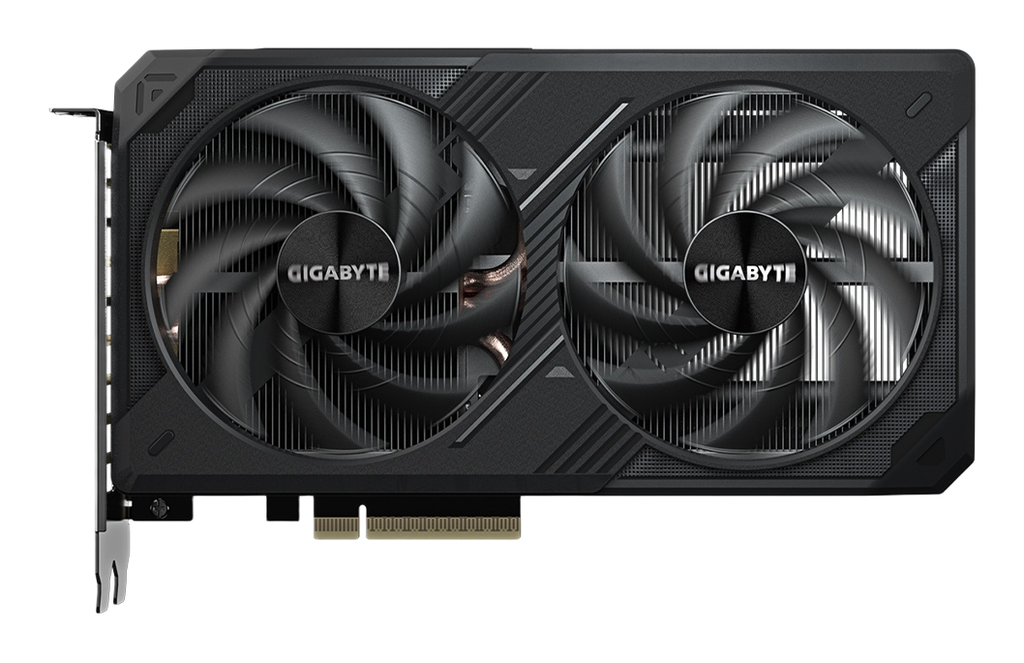
Gigabyte GeForce RTX 5060 Ti WINDFORCE 8GB
Specifications
8 GB
GDDR7 VRAM
448 GB/s
Bandwidth
2407 MHz
Boost clock
180 W
Board power
About this GPU
The RTX 5060 Ti 8GB is Nvidia's current-generation mid-range GPU, sitting at the lower end of the Blackwell RTX 50 series stack. It targets 1080p gaming first, with enough headroom for 1440p at moderate settings - but the 8GB framebuffer defines the experience more than any other spec on the card. If you mostly play at 1080p on medium-to-high settings, it performs well. If you want to push 1440p ultra or enable ray tracing in demanding titles, VRAM becomes a wall rather than a soft limit.
The underlying hardware is genuinely capable. The jump to GDDR7 gives the card 448 GB/s of bandwidth despite the 128-bit bus - a 55% bandwidth improvement over the RTX 4060 Ti - and that helps maintain rasterization performance in scenarios where a narrow bus would otherwise hurt. At 1080p with settings below maximum, benchmarks across 21 games show the 8GB and 16GB variants performing nearly identically, separated by just 2-3%. But at 1440p ultra across rasterization-only titles, the gap opens to around 10%, and once ray tracing enters the picture, the 8GB card falls 26-40% behind its 16GB sibling depending on the test. Games like Assassin's Creed Shadows and Horizon Zero Dawn Remastered are already pushing past 8GB headroom at higher settings, resulting in texture pop-in and frame pacing issues rather than a clean performance drop. DLSS 4 Multi-Frame Generation can mask some of this in supported titles - Cyberpunk 2077 at 1440p with RT still lands around 53 FPS natively - but MFG adds latency and isn't a substitute for having enough VRAM to begin with. At 180W TDP, thermals and power draw are reasonable for the performance class.
Pros and Cons
Pros:
- Strong 1080p rasterization performance with near-identical results to the 16GB model at medium-to-high settings
- GDDR7 memory delivers 448 GB/s of bandwidth that punches above what the 128-bit bus would suggest
- DLSS 4 with Multi-Frame Generation available, which meaningfully lifts framerates in supported games
Cons:
- 8GB VRAM is a hard ceiling that causes stutters and texture quality degradation when exceeded in demanding titles at 1440p
- Ray tracing performance at 1440p ultra drops 30-40% versus the 16GB variant, making RT at that resolution impractical in many modern games
- PCIe 5.0 x8 lane configuration may cause minor bottlenecks in older platforms with PCIe 3.0 x8 slots
Alternatives
- comparable gpu: AMD Radeon RX 9060 XT 16GB - The direct AMD competitor at the same performance tier. Raster performance is similar, but the 16GB GDDR6 configuration eliminates the VRAM problem that defines the 8GB 5060 Ti. Lacks MFG support but FSR 4 is competitive. Better pick if you game at 1440p or plan to keep the card for several years.
- budget pick: Intel Arc B580 12GB - Lower raw performance but ships with 12GB GDDR6, which keeps it competitive at 1440p in VRAM-heavy titles where the 5060 Ti 8GB stumbles. A reasonable option if you want more headroom and don't need ray tracing or DLSS.
- upgrade pick: Nvidia GeForce RTX 5060 Ti 16GB - The same GPU, same architecture, same power draw - just without the framebuffer constraint. At 1080p the difference is negligible, but at 1440p it's a substantially different card for ray tracing and demanding open-world games.
Price history
Price history excludes Amazon sources
Affiliate link disclosure: some product links on this page may be affiliate links. If you click on these links and make a purchase, we may earn a commission. This doesn't affect the price you pay or influence which listings are displayed.
Listings
Listings sorted by Price, ascending.