AMD Radeon RX 9060 XT 16 GB
Released 2025/06
XFX Swift Radeon RX 9060 XT OC White Triple Fan Gaming Edition 16GB
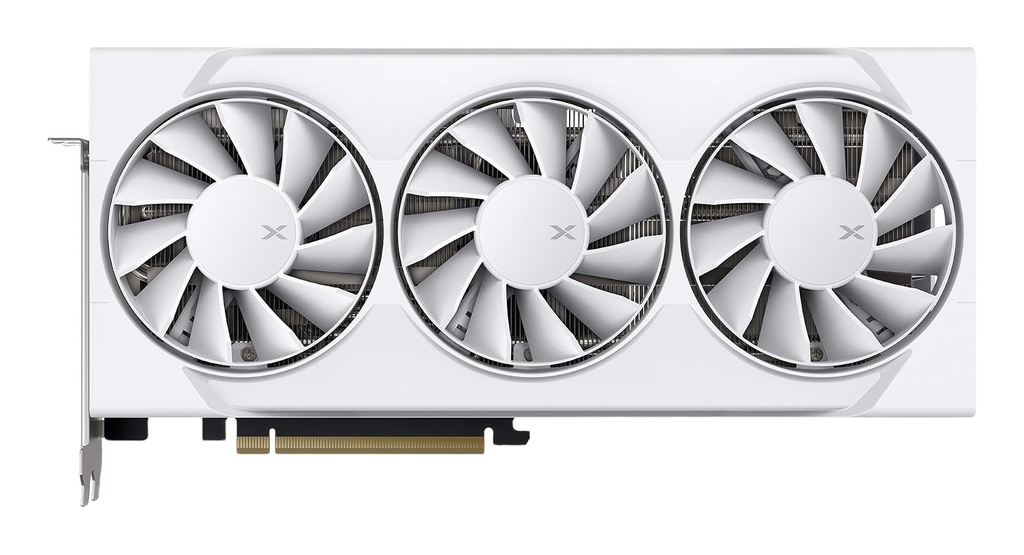
Specifications
16 GB
GDDR6 VRAM
322.3 GB/s
Bandwidth
1700 MHz
Boost clock
160 W
Board power
About this GPU
The RX 9060 XT 16GB sits in AMD's current RDNA 4 lineup as the mainstream option below the RX 9070 series. It's built around the Navi 44 die with 32 compute units and targets 1080p and 1440p gaming. The 16GB variant adds meaningful headroom for high-resolution texture packs and avoids the VRAM pressure that hits competing 8GB cards at 1440p with demanding settings.
At 1080p, the card typically delivers over 100 fps in AAA titles at high settings, often clearing 120 fps in less demanding games. At 1440p native, expect averages in the 70-80 fps range in modern AAA titles at high/ultra, depending on the game engine. Against the RTX 5060 Ti 8GB at 1440p, the 9060 XT 16GB holds around a 7.4% lead - modest on average, but the gap grows to roughly 42.8% at 4K, almost entirely because the 5060 Ti 8GB runs out of VRAM headroom. When compared to the RTX 5060 Ti 16GB, the picture flips: the Nvidia card leads by around 7-11% across 1080p and 1440p in most games. Ray tracing is a real step forward for AMD here. RDNA 4's third-generation RT accelerators deliver roughly double the throughput per compute unit versus RDNA 3, closing the gap substantially against Nvidia in most RT workloads, though the RTX 5060 Ti still has an edge in the heaviest path-tracing scenarios. FSR 4 adds practical headroom for pushing frame rates in supported titles without visible quality regression at 1440p.
The 160W TDP is efficient for where this card performs. Real-world board power under load runs just above that at 163-164W. Some AIB coolers push clocks higher and land closer to 180W, but GPU temperatures across tested models stayed under 70°C hotspot on most air coolers. The card fits into a standard ATX build on a single 8-pin or 16-pin connector depending on the AIB's design - no premium power supply required.
The main hardware constraint worth knowing is the 128-bit memory bus. With 20 Gbps GDDR6, total bandwidth lands at 320 GB/s - roughly 28% less than the 448 GB/s the RTX 5060 Ti 16GB achieves with GDDR7. In most games this isn't the bottleneck at 1440p, but it shows up in bandwidth-sensitive scenarios like very high render resolutions or certain compute workloads.
Pros and Cons
Pros:
- 16GB GDDR6 prevents VRAM bottlenecks at 1440p with high-texture settings, where competing 8GB cards noticeably stutter or drop performance
- RDNA 4 ray tracing is a large leap over RDNA 3, making RT workloads competitive with the RTX 5060 Ti in most titles
- 160W rated TDP keeps it practical for mid-range builds; most AIB coolers hold it well under 70°C without noise
- FSR 4 upscaling on a current-generation card with dedicated AI accelerators improves 1440p frame rates without sharp visual degradation
Cons:
- 128-bit bus with GDDR6 limits memory bandwidth to 320 GB/s - about 28% behind the RTX 5060 Ti 16GB's GDDR7 bandwidth, which matters in bandwidth-sensitive workloads
- Native 1440p performance in the most demanding titles (Cyberpunk with RT, Alan Wake 2 path tracing) can land in the 50-60 fps range without upscaling
- RT still trails the RTX 5060 Ti in games with heavy path tracing; the gap narrows with FSR 4 enabled but doesn't close entirely
Alternatives
- GeForce RTX 5060 8GB: Comparable rasterization performance at 1080p and slightly behind at 1440p, with DLSS 4 multi-frame generation support; the 8GB buffer is a real constraint at 1440p ultra settings and will only get worse over time, so it makes sense mainly if your library leans heavily on DLSS and you game at 1080p — GeForce RTX 5060
- Radeon RX 9060 XT 8GB: Around 5-8% slower than the 16GB at 1080p and noticeably behind in VRAM-heavy games at 1440p; only makes sense if you're primarily gaming at 1080p on a tight system budget and not running high-resolution texture packs — Radeon RX 9060 XT 8 GB
- Radeon RX 9070: A clear step up for committed 1440p gaming, with roughly 30-40% more headroom in demanding titles and a wider 192-bit bus; worth considering if 1440p at native ultra settings without upscaling is the goal — Radeon RX 9070
Price history
Price history excludes Amazon sources
Affiliate link disclosure: some product links on this page may be affiliate links. If you click on these links and make a purchase, we may earn a commission. This doesn't affect the price you pay or influence which listings are displayed.
Listings
Listings sorted by Price, ascending.