AMD Radeon RX 9060 XT 8 GB
Released 2025/06
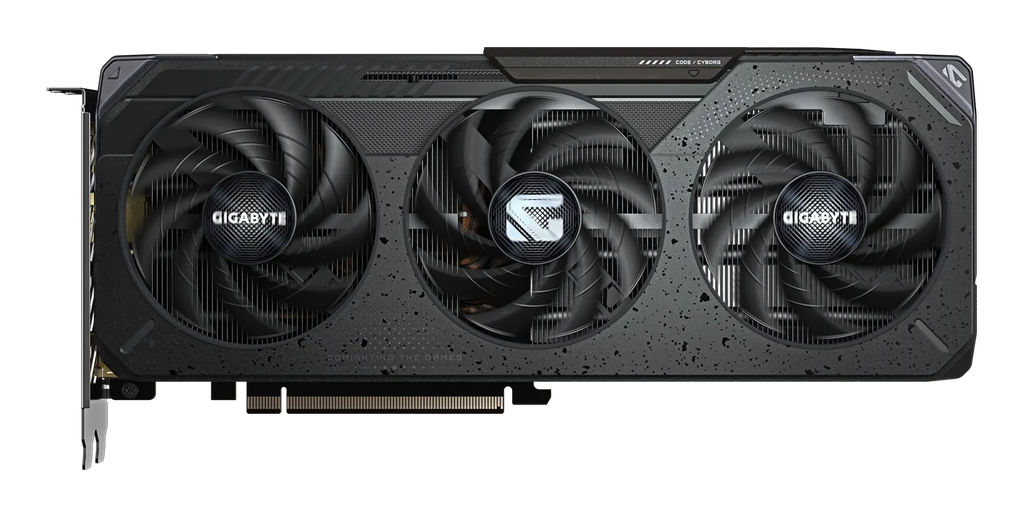
Gigabyte Radeon RX 9060 XT GAMING OC 8GB
Specifications
8 GB
GDDR6 VRAM
322.3 GB/s
Bandwidth
1700 MHz
Boost clock
150 W
Board power
About this GPU
The RX 9060 XT 8GB sits at the mainstream end of AMD's current RDNA 4 lineup, aimed squarely at 1080p gaming with enough headroom to handle 1440p in the right conditions. It uses the same Navi 44 silicon as the 16GB variant, but the halved VRAM is a meaningful constraint that shapes what this card actually is. If your monitor is 1080p and you're not chasing ultra textures in every new release, it does its job cleanly. At 1440p, the story gets complicated fast.
In gaming, the RDNA 4 architecture gives this card a real leg up over the previous generation. It pulls roughly 40% ahead of the Radeon RX 7600 XT at 1080p across a range of titles, and in many rasterization benchmarks it runs neck-and-neck with the RTX 5060 Ti, which is a card in a higher price bracket. At 1080p with high or ultra settings, the 8GB frame buffer isn't usually a problem — most titles stay comfortably under the limit and framerates are smooth. Cyberpunk 2077 at 1080p with Ray Tracing Ultra via FSR Quality lands around 80 fps, and Red Dead Redemption 2 maxed out averages around 105 fps. Performance is competitive where memory isn't the bottleneck.
The 8GB limit starts to bite at 1440p, particularly in texture-heavy modern games. Dragon Age: The Veilguard at 1440p ultra pushes well past 8GB when available — the 16GB variant is roughly 90% faster in average frame rate in that title, with 1% lows that are over 3x higher. Indiana Jones and the Great Circle shows a similar pattern: the 8GB card drops to around 23 fps at 1440p ultra where the 16GB version holds 78 fps. These aren't edge cases; they're some of the most-played recent releases. In less VRAM-hungry games, the 8GB variant handles 1440p fine, but you'll need to dial back texture settings in anything that shipped in the last two years with high-res assets. Ray tracing performance is genuinely better than AMD's RDNA 3 generation — the third-gen RT accelerators deliver over 2x the throughput per compute unit — so it's usable in supported titles at 1080p without FSR as a crutch, though heavy RT presets still impose a cost.
Power draw on the 8GB model sits around 150W under full load, noticeably lower than the 16GB's 160-180W operating range. Partner card coolers are generally well-matched to that TDP — most designs run quietly and stay thermally comfortable. A 550-600W PSU covers the system comfortably. The card uses PCIe 5.0 x16, but PCIe 4.0 systems see minimal real-world impact. PCIe 3.0 is where things can degrade meaningfully, particularly in VRAM-saturating scenarios where data has to stream over a bandwidth-limited bus.
Pros and Cons
Pros:
- Strong 1080p gaming performance with clear improvement over the previous generation
- Low 150W TDP keeps cooling and system power requirements modest
- RDNA 4 ray tracing is meaningfully improved and usable at 1080p
Cons:
- 8GB VRAM is a hard ceiling in many recent titles at 1440p ultra settings
- The 16GB variant is a materially different product at 1440p, not just a minor downgrade
- PCIe 3.0 systems can see disproportionate performance loss when the frame buffer fills
Alternatives
- comparable gpu: RTX 5060 Ti 8GB — near-identical performance tier with access to DLSS 4 and Multi Frame Generation; better if you rely on Nvidia's upscaling ecosystem (/gpus/geforce-rtx-5060-ti-8gb)
- budget pick: Intel Arc B580 — slower in raw rasterization but ships with more VRAM, avoiding worst 1440p VRAM saturation issues (/gpus/arc-b580)
- upgrade pick: RX 9060 XT 16GB — same GPU with double the memory, removing the primary weakness for 1440p gaming (/gpus/radeon-rx-9060-xt-16-gb)
Price history
Price history excludes Amazon sources
Affiliate link disclosure: some product links on this page may be affiliate links. If you click on these links and make a purchase, we may earn a commission. This doesn't affect the price you pay or influence which listings are displayed.
Listings
Listings sorted by Price, ascending.