Intel Arc B580
Released 2024/12
Intel Arc B580 Limited Edition 12GB
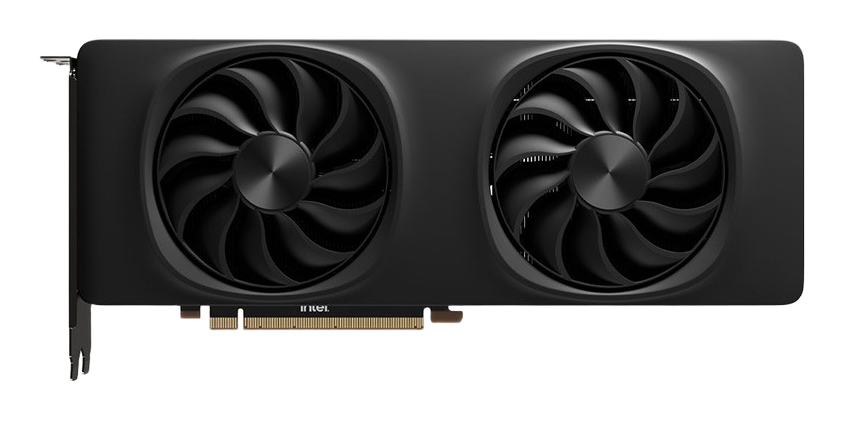
Specifications
12 GB
GDDR6 VRAM
456 GB/s
Bandwidth
2670 MHz
Boost clock
190 W
Board power
About this GPU
The Intel Arc B580 is Intel's current-generation desktop GPU, built on the Battlemage (Xe2) architecture. It targets 1080p and 1440p gaming, and its 12GB of GDDR6 VRAM stands out in a tier where newer competitors like the GeForce RTX 5060 ship with only 8GB. It's a card that makes sense for someone building a mid-range system who wants extra VRAM headroom for texture-heavy titles.
At 1080p the B580 handles the vast majority of modern games at high or ultra settings. In DX12 and Vulkan titles it consistently trades blows with the GeForce RTX 4060 and often comes out ahead — a measured lead was reported in Final Fantasy XIV at 4K, and the gap is meaningful even at 1440p in well-optimized titles. In DX11 games, Intel's driver overhead used to cause notable performance hits on some mid-range and older CPUs; Intel addressed many of these cases in a late 2025 driver update with game-specific optimizations, though improvements are not universal across every title. With a modern CPU you are less likely to run into these issues. Ray tracing performance is meaningfully better than first-generation Arc cards, but it still trails Nvidia at equivalent settings - usable, not class-leading. As of February 2026, Intel rolled out XeSS 3 Multi-Frame Generation for the B580, which can multiply perceived frame rates by 2x–4x in supported titles. Testing shows 200%+ gains with 4x MFG in games like Dying Light: The Beast when paired with XeSS Super Resolution, with Intel's XeLL latency compensation helping to keep input lag manageable.
Pros and Cons
Pros:
- 12GB GDDR6 VRAM is an advantage over cards that ship with 8GB, helping with high-res textures and future-proofing
- Strong DX12 and Vulkan performance; matches or beats the GeForce RTX 4060 in many well-optimized modern titles
- XeSS 3 Multi-Frame Generation (added February 2026) provides a substantial frame rate multiplier in supported games
Cons:
- DX11 driver overhead remains a per-game variable - older or CPU-bound scenarios can still see performance dips in specific titles
- Competing cards like the GeForce RTX 5060 and Radeon RX 9060 XT have launched with higher rasterization performance, tightening the B580's position
- VR support has had reliability issues; if VR is a priority, the card requires more vetting per headset and title
Alternatives
- comparable gpu: GeForce RTX 5060 - Faster in most workloads and benefits from DLSS 4 and Multi Frame Generation support, but ships with 8GB of VRAM which may limit longevity.
- budget pick: GeForce RTX 5050 - Broadly similar performance to the B580 in synthetic benchmarks and has DLSS 4 support, though it also ships with 8GB of VRAM.
- upgrade pick: Radeon RX 9060 XT 16 GB - Higher rasterization performance and more VRAM, with a mature FSR 4 implementation, making it a cleaner upgrade if raw performance is the priority.
Price history
Price history excludes Amazon sources
Affiliate link disclosure: some product links on this page may be affiliate links. If you click on these links and make a purchase, we may earn a commission. This doesn't affect the price you pay or influence which listings are displayed.
Listings
Listings sorted by Price, ascending.