Nvidia GeForce RTX 5060 Ti 16GB
Released 2025/04
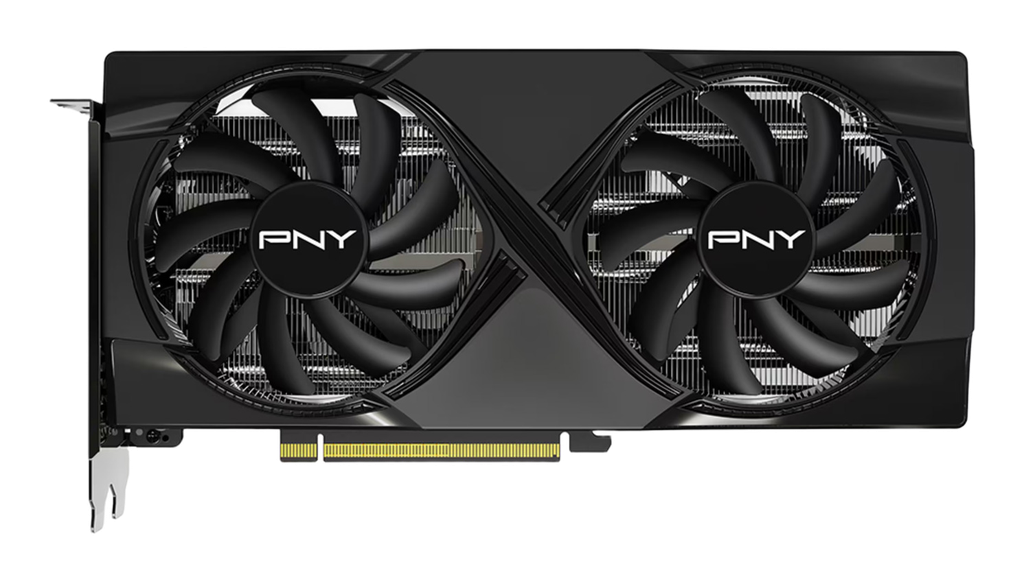
PNY GeForce RTX 5060 Ti 16GB Overclocked Dual Fan
Specifications
16 GB
GDDR7 VRAM
448 GB/s
Bandwidth
2407 MHz
Boost clock
180 W
Board power
About this GPU
The RTX 5060 Ti 16GB is Nvidia's mid-range offering in the Blackwell (RTX 50-series) lineup. It targets gamers who primarily play at 1080p and want headroom for 1440p, without stepping into the higher power and cost of the RTX 5070. The 16GB GDDR7 frame buffer and 448 GB/s of memory bandwidth are meaningful here - not just a spec checkbox - because 8GB variants are running into real problems in 2025–2026 titles at max settings, with most major 2025 releases showing measurable VRAM pressure on 8GB cards.
In real-world gaming the card handles 1080p ultra without issue and lands comfortably in 1440p high/medium territory in most titles. Reported averages are around 98–100 FPS at 1080p high/ultra and roughly 80–90 FPS at 1440p depending on the title and settings. At 1440p max settings in Cyberpunk 2077 with ray tracing, native performance sits around 53 FPS - playable with DLSS quality mode, but tight without it. With DLSS 4 Multi-Frame Generation enabled in supported games, reported frame counts can push well past 100 FPS at 1440p, though that output is upscaled and generated rather than purely rendered. The generational jump over the GeForce RTX 4060 Ti is roughly 15–19% faster at 1080p and around 21% at 1440p. The GeForce RTX 5070 sits about 27–31% ahead at 1440p, a noticeable step if you push higher settings or resolutions.
Pros and Cons
Pros:
- 16GB GDDR7 eliminates VRAM bottlenecks that hurt 8GB cards at 1080p max settings and above
- Modest 180W TDP with measured load often closer to 150–165W, keeping PSU requirements straightforward
- DLSS 4 with Multi-Frame Generation is supported, extending effective frame rates in supported games
Cons:
- Runs PCIe 5.0 x8 rather than x16 - on a PCIe 4.0 system this becomes an effective x8 PCIe 4.0 link, which can introduce a small performance ceiling in bandwidth-sensitive workloads
- Native ray tracing performance is moderate - you'll need DLSS to maintain smooth frame rates in heavily RT-dependent titles at 1440p
- The Radeon RX 9060 XT 16GB competes closely in raw rasterization, particularly at 1080p, and draws less power under load
Alternatives
- comparable gpu: Radeon RX 9060 XT 16GB - trades within a few percent in rasterization at 1080p and lags slightly at 1440p; a solid AMD alternative if you prefer its ecosystem
- budget pick: Arc B580 - notably below the 5060 Ti in performance but offers 12GB of VRAM and is reasonable for less demanding 1080p workloads
- upgrade pick: GeForce RTX 5070 - roughly 28–31% faster at 1440p with higher memory bandwidth, a clear step up for consistent max-settings 1440p or any 4K use
Price history
Price history excludes Amazon sources
Affiliate link disclosure: some product links on this page may be affiliate links. If you click on these links and make a purchase, we may earn a commission. This doesn't affect the price you pay or influence which listings are displayed.
Listings
Listings sorted by Price, ascending.