Nvidia GeForce RTX 5070
Released 2025/01
ASUS TUF Gaming GeForce RTX 5070 OC Edition 12GB
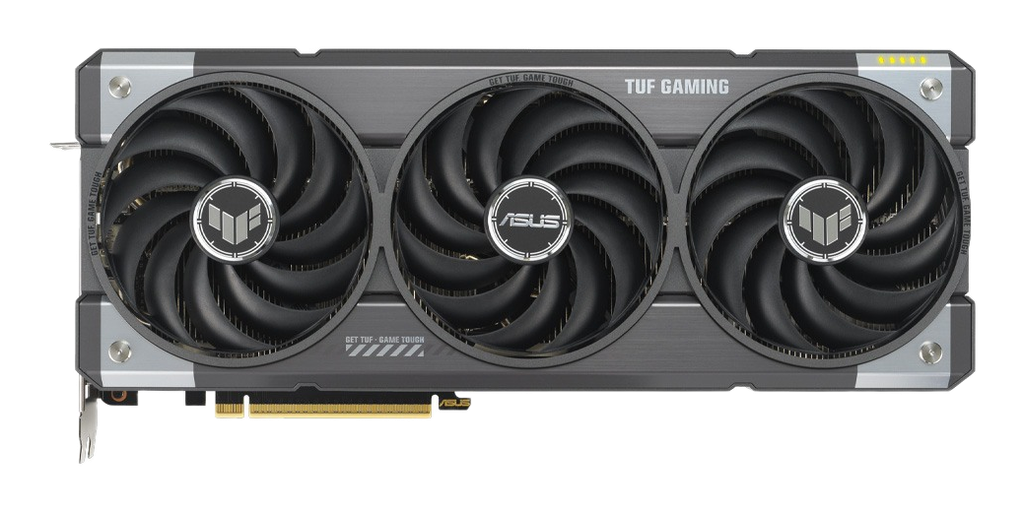
Specifications
12 GB
GDDR7 VRAM
672.2 GB/s
Bandwidth
2165 MHz
Boost clock
250 W
Board power
About this GPU
The RTX 5070 sits in the middle of Nvidia's current Blackwell lineup, slotting below the RTX 5070 Ti and above the RTX 5060 Ti 16GB. On paper it targets 1440p gaming, and that's still where it's most comfortable - most AAA titles at 1440p high/ultra settings land in the 70–100+ FPS range without needing DLSS at all. Where things get complicated is 4K and ray tracing, where a 12GB VRAM buffer increasingly becomes a hard ceiling rather than just a soft one.
In rasterization at 1440p, the 5070 performs close to where a previous-gen RTX 4070 Super landed, with the extra GDDR7 bandwidth giving it a leg up in bandwidth-sensitive titles like Hogwarts Legacy while making little difference in CPU-bound or well-optimized workloads. Across a broad 16-game sample, the gap over the RTX 4070 Super is roughly 1–5% at 1440p and 4K respectively - a modest generational step. The Radeon RX 9070 XT is around 17% faster at 1440p and 21% faster at 4K across similar test pools. At 4K in demanding titles, the 5070 averages around 40–52 FPS natively in games like Black Myth: Wukong and Marvel Rivals - playable with DLSS Quality upscaling, but not a native 4K card.
The 12GB GDDR7 buffer is the most concrete limitation here, and it's not a hypothetical concern. Indiana Jones and the Great Circle at 1440p with full path tracing enabled drops to around 13 FPS average as VRAM fills - the game flat-out refuses to run at 4K with those settings. Alan Wake 2's RT path tracing mode similarly hits the framebuffer hard. In games that don't push VRAM past 12GB, ray tracing performance is fine for mid-quality settings; it's the heavier path-traced scenarios where the cap becomes a real problem. DLSS 4 Multi-Frame Generation can multiply displayed frame rates in supported games, which helps smooth out demanding RT workloads - but it adds latency rather than reducing it, so it's smoothness you're buying, not responsiveness.
Power draw sits around 250W under load, roughly in line with the RTX 4070 Super before it. Thermals depend heavily on the board partner cooler - the Founders Edition peaks around 72°C with fan noise around 39 dBA, while quieter AIB models from Asus and Gigabyte run closer to 62–63°C at 34–35 dBA. A 750W PSU is comfortable here; a quality 650W unit technically covers it, though headroom is tighter.
Pros and Cons
Pros:
- Solid 1440p rasterization performance with most AAA titles hitting playable frame rates at high/ultra settings without upscaling
- DLSS 4 with Multi-Frame Generation improves smoothness noticeably in supported titles
- 250W power draw is reasonable for the performance tier, and many board partner coolers run quiet and cool
Cons:
- 12GB VRAM is already a real constraint in path-traced workloads and VRAM-heavy ray-traced titles at 1440p
- Rasterization uplift over the previous generation is thin - roughly 1–5% over the RTX 4070 Super in most tests
- 4K gaming without upscaling is limited; native 4K averages in demanding titles are often in the 40–52 FPS range
Alternatives
- comparable gpu: Radeon RX 9070 - trades close to the RTX 5070 at 1440p while offering more VRAM headroom
- budget pick: RTX 5060 Ti 16GB - lower throughput but a 16GB GDDR7 buffer avoids the VRAM ceiling in heavier workloads
- upgrade pick: RTX 5070 Ti - adds 16GB GDDR7 on a wider bus for noticeably higher rasterization and better RT/4K headroom
Price history
Price history excludes Amazon sources
Affiliate link disclosure: some product links on this page may be affiliate links. If you click on these links and make a purchase, we may earn a commission. This doesn't affect the price you pay or influence which listings are displayed.
Listings
Listings sorted by Price, ascending.