Nvidia GeForce RTX 5070 Ti
Released 2025/02
PNY GeForce RTX 5070 Ti Triple Fan OC 16GB
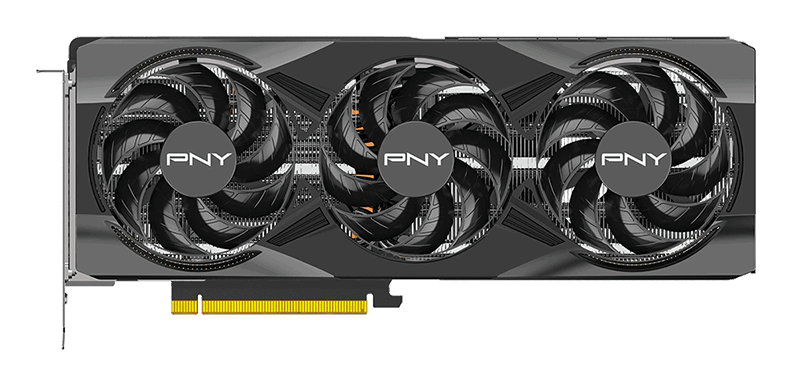
Specifications
16 GB
GDDR7 VRAM
896 GB/s
Bandwidth
2300 MHz
Boost clock
300 W
Board power
About this GPU
The RTX 5070 Ti sits in the upper tier of Nvidia's Blackwell (RTX 50) lineup, positioned between the RTX 5070 and the RTX 5080. It targets 1440p and 4K gaming with headroom to spare, and its 16GB of GDDR7 at 896 GB/s makes it one of the more VRAM-capable cards in its tier. That's notably more bandwidth than the Radeon RX 9070 XT, though the RTX 5080 steps ahead with faster GDDR7 modules pushing 960 GB/s.
In native rasterization, the card's real-world output lands roughly where the previous-generation GeForce RTX 4080 SUPER did. Against the GeForce RTX 4070 Ti SUPER from Ada Lovelace, the improvement runs 10-15% at 1440p and similar at 4K - real, but not dramatic. Radeon RX 9070 XT is a genuine rasterization rival, sitting within 5-6% of the 5070 Ti in most pure-raster tests and occasionally pulling ahead. Where the 5070 Ti pulls away is in ray tracing, where Nvidia's 4th-gen RT cores give it a clear lead, and in DLSS 4 with Multi-Frame Generation (MFG) - a Blackwell-exclusive feature. In supported titles, MFG can push the 5070 Ti well past 300 FPS at 1440p from a 90-100 FPS native baseline. That multiplier comes with added latency, so it works best on high-refresh monitors with Nvidia Reflex active, rather than as a substitute for raw frame rate.
At 4K without upscaling, the card averages just above 60 FPS across demanding modern titles. At 1440p it's comfortable across the board, clearing 100+ FPS natively in virtually everything released through 2025 and into 2026. The 300W TDP is competitive for the performance class, putting it on roughly equal footing with the 9070 XT on power draw.
One practical caveat in 2026: supply has been inconsistent. Nvidia has been diverting GDDR7 allocation toward data center production, and the 5070 Ti has seen constrained availability. The card is not discontinued, but finding one has required patience. If availability normalizes, it's a strong option for a high-refresh 1440p or capable 4K setup.
Pros and Cons
Pros:
- 16GB GDDR7 at 896 GB/s gives clear headroom over the Radeon RX 9070 XT in VRAM-intensive games and creative workloads
- Strong ray tracing performance thanks to 4th-gen RT cores, making a visible difference in titles that lean on ray tracing
- DLSS 4 Multi-Frame Generation meaningfully expands usable frame rates in supported titles, particularly on 165Hz+ monitors
Cons:
- Native rasterization performance closely mirrors the GeForce RTX 4080 SUPER from the previous generation - the step forward from Ada Lovelace is incremental rather than generational
- Supply shortages in 2026 have made the card harder to source
- Multi-Frame Generation adds measurable latency, so high displayed frame rates don't always translate equally to feel - less ideal for competitive or fast-reaction games
Alternatives
- comparable gpu: Radeon RX 9070 XT - Competitive in rasterization and often within a few percent of the 5070 Ti, but generally behind in ray tracing and without DLSS/MFG
- budget pick: RTX 5070 - Fewer shader processors and less memory bandwidth, but still a capable 1440p card with lower power draw and a smaller footprint
- upgrade pick: RTX 5080 - Faster 960 GB/s memory bandwidth and roughly 7-10% higher native performance, making it the cleaner pick for consistent 4K gaming at high settings
Price history
Price history excludes Amazon sources
Affiliate link disclosure: some product links on this page may be affiliate links. If you click on these links and make a purchase, we may earn a commission. This doesn't affect the price you pay or influence which listings are displayed.
Listings
Listings sorted by Price, ascending.