Nvidia GeForce RTX 5080
Released 2025/01
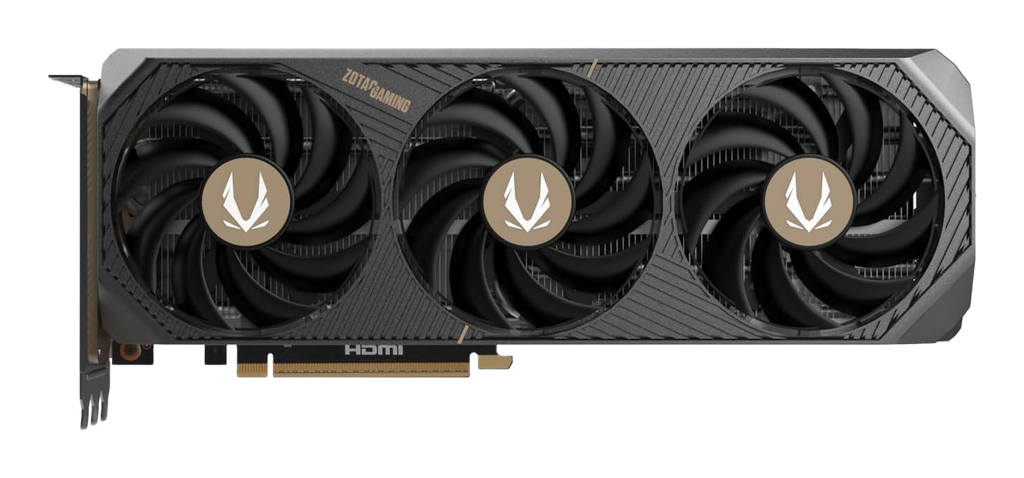
ZOTAC GAMING GeForce RTX 5080 SOLID CORE OC 16GB
Specifications
16 GB
GDDR7 VRAM
960 GB/s
Bandwidth
2295 MHz
Boost clock
360 W
Board power
About this GPU
The RTX 5080 is Nvidia's second-highest Blackwell GPU, sitting just below the RTX 5090 in the current RTX 50-series stack. It targets enthusiast 4K gaming and heavy creative workloads, but what defines it in practice is how much of its ceiling is tied to DLSS 4 Multi Frame Generation rather than native rasterization gains alone.
In straight rasterization, the 5080 handles 1440p easily — benchmarks put it around 130–135 FPS average in demanding titles at that resolution. At 4K, it pulls about 10–12% ahead of AMD's RX 9070 XT in rasterization, and the gap widens once ray tracing enters the picture. Cyberpunk 2077 at 4K Ultra is a good illustration: the 5080 averages around 75 FPS versus the 9070 XT's 62 FPS natively, and across a six-game ray tracing suite the 5080 averaged 53 FPS versus 48 FPS for the 9070 XT. The RTX 4090 still beats it at 4K by roughly 20-25% in heavier workloads, and the step up from the 4080 Super is only 7-10% without MFG enabled - narrower than the launch generation shift might suggest.
Multi Frame Generation changes the equation considerably. With DLSS 4 MFG active in supported titles, the 5080 can exceed 240 FPS at 1440p, generating up to three additional frames per traditionally rendered frame. The caveat is that MFG adds input latency - how noticeable that is depends on base framerate and the game. In high-refresh competitive play where base performance is already strong, MFG is a straightforward win. In slower-paced titles where the underlying framerate is already comfortable, the tradeoff is less clear-cut. Support has expanded past 125 titles as of mid-2025, so game-by-game availability is less of a concern than it was at launch.
Power draw in real-world gaming lands well below the 360W TGP rating. Tom's Hardware measured an average of 297W at 4K Ultra - comparable to the 4080 Super - and the Founders Edition cooler keeps GPU temps below 65°C under extended load, with VRAM settling around 76°C. AIB boards that push closer to the TDP ceiling will behave differently, but the baseline thermal story is clean.
Pros and Cons
Pros:
- DLSS 4 Multi Frame Generation is exclusive to RTX 50-series and materially changes output ceiling in supported titles
- Clear ray tracing advantage over AMD competitors at this tier
- Actual power draw in gaming sits well below the rated 360W, keeping thermals predictable
- 16GB GDDR7 at 960 GB/s handles current 4K gaming and creative workloads without pressure
Cons:
- Native generational uplift over the 4080 Super is only 7-10% without MFG - the upgrade math is thin if you're coming from last gen's flagship tier
- The RTX 5090 outpaces it by 44-50% at 4K, an unusually wide gap compared to previous "80 vs 90" generations
- MFG-boosted framerates come with added input latency that requires per-game assessment rather than blanket enablement
- 16GB VRAM is adequate for gaming but limits the card in high-resolution AI workflows compared to the 5090's 32GB
Alternatives
- comparable gpu: RX 9070 XT - The closest AMD current-gen competitor, about 10-12% slower in rasterization and trailing more in ray tracing; a solid pick if Multi Frame Generation is not part of your workload
- budget pick: RTX 5070 Ti - Same Blackwell architecture with full DLSS 4 and MFG support, trades a moderate performance step at 4K while keeping the Blackwell feature set
- upgrade pick: RTX 5090 - The only current card that clearly eclipses the 5080, with a large raw performance lead at 4K, 32GB GDDR7, and much higher bandwidth for memory-intensive creative or AI workloads and heavy ray tracing at high refresh rates
Price history
Price history excludes Amazon sources
Affiliate link disclosure: some product links on this page may be affiliate links. If you click on these links and make a purchase, we may earn a commission. This doesn't affect the price you pay or influence which listings are displayed.
Listings
Listings sorted by Price, ascending.