Nvidia GeForce RTX 5090
Released 2025/01
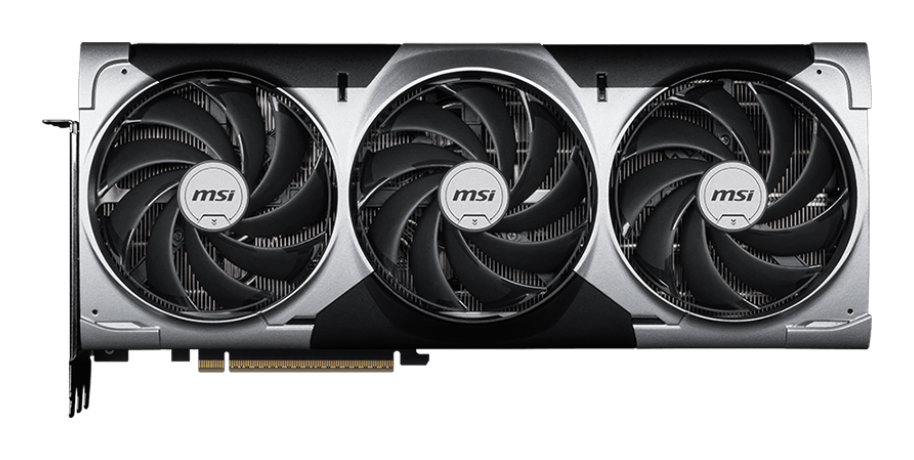
MSI GeForce RTX 5090 VENTUS 3X OC 32GB
Specifications
32 GB
GDDR7 VRAM
1790 GB/s
Bandwidth
2017 MHz
Boost clock
575 W
Board power
About this GPU
The RTX 5090 is Nvidia's current flagship in the Blackwell (RTX 50 series) lineup, and nothing in consumer graphics sits above it right now. It's built for native 4K gaming, heavy ray tracing and path tracing workloads, and tasks like local AI inference or high-resolution video editing that genuinely benefit from the 32GB GDDR7 VRAM. At 1440p, a lot of what makes this card special starts to disappear - the gap over the RTX 5080 shrinks considerably, and CPU limits start showing up before the GPU is fully loaded.
In 4K rasterization, the 5090 lands roughly 20-50% ahead of the RTX 4090 depending on the game, with ray tracing tests showing around 27-35% gains. What those numbers don't prepare you for is how hard path-traced titles still hit the 5090 at native 4K. Black Myth: Wukong with ray tracing on at 4K Ultra sits around 29-32 FPS native, and Alan Wake 2 at 4K with full path tracing stays below 60 FPS without upscaling. These games are not playable at 4K without DLSS Quality or higher - the 5090 is no exception. The "2x the 4090" figure Nvidia uses in its marketing comes specifically from DLSS 4 Multi Frame Generation enabled, not native rasterization. MFG is exclusive to RTX 50 series and can push displayed framerates well above 300 FPS in lighter titles, but input latency doesn't improve at the same rate the frame counter climbs, which matters for fast-reflex or competitive play. DLSS 4 also brings a new Transformer-based model for upscaling that produces cleaner results than DLSS 3 in most scenarios, and that upscaling quality gain carries independent of frame generation.
Power draw is the most concrete tradeoff here. The 5090 pulls around 560-595W under gaming load - roughly 30-33% more than the 4090 - and Nvidia recommends at least a 1000W PSU. It uses the 12VHPWR connector and ships with a 4x 8-pin adapter for older supplies. This is physically a large card, and it rewards cases with strong airflow. The 32GB GDDR7 VRAM gives it a real long-term edge in VRAM-heavy workloads: high-texture 4K mods, large local language models, and 4K video timelines where cards with 16GB or less start paging.
Pros and Cons
Pros:
- Fastest consumer GPU available - no competitor currently occupies the same tier
- 32GB GDDR7 VRAM handles current 4K texture workloads and memory-heavy creative tasks without throttling
- DLSS 4 Multi Frame Generation with the new Transformer upscaling model produces noticeably cleaner image quality than DLSS 3
Cons:
- Very high power draw and thermal requirements - demands a large PSU and strong case airflow
- At 1440p, the performance advantage over the RTX 5080 narrows significantly
- Native rasterization gains over the RTX 4090 are meaningful but not dramatic - path-traced 4K still often requires DLSS to be playable
Alternatives
- comparable gpu: GeForce RTX 5080 - Same Blackwell generation and full DLSS 4 support, strong 4K gaming with lower power draw and less VRAM
- budget pick: Radeon RX 9070 XT - Competitive at 1440p, draws less power, and supports FSR 4 if flagship 4K performance isn't required
- upgrade pick: There isn't one - the RTX 5090 is the top of Nvidia's current stack and no higher-tier successor has been announced for 2026
Price history
Price history excludes Amazon sources
Affiliate link disclosure: some product links on this page may be affiliate links. If you click on these links and make a purchase, we may earn a commission. This doesn't affect the price you pay or influence which listings are displayed.
Listings
Listings sorted by Price, ascending.