Lexar NM990 4TB
4TB · M.2 2280 · PCIe 5.0 x4
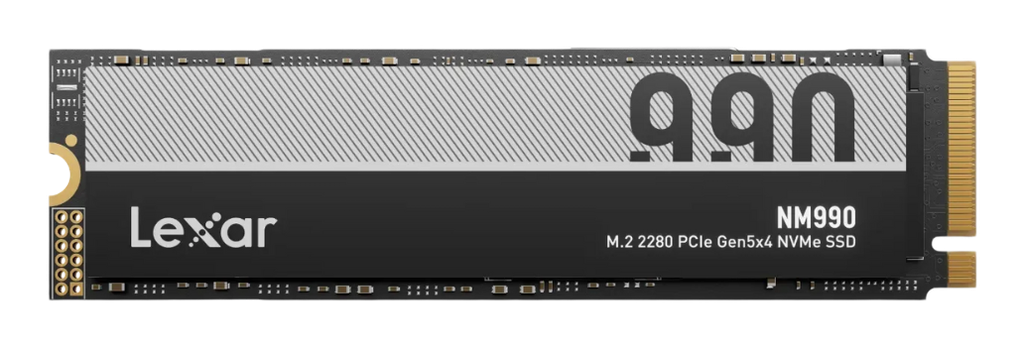
Specifications
No
DRAM cache
14000 MB/s
Sequential read
11000 MB/s
Sequential write
3000 TBW
Endurance
Family guide
Lexar PCIe 5.0 SSDs| NM1090 | NM1090 PRO | NM990 This model | |
|---|---|---|---|
| Released | 2024 | 2025 | 2025 |
| Interface | Not available | PCIe 5.0 x4 | PCIe 5.0 x4 |
| Read | Not available | 14000 MB/s | 14000 MB/s |
| Write | Not available | 13000 MB/s | 11000 MB/s |
| Endurance | Not available | 2800 TBW | 3000 TBW |
| Summary | Has a DRAM cache and is sold only with a fan-cooled heatsink, as it can run hot under sustained load. | Draws less power than the NM1090 but ships without a heatsink, so it may need one under sustained load. | DRAM-less, unlike the NM1090 and NM1090 PRO; it borrows a little system memory (HMB) instead. |
Capacity grid
| 1TB | 2TB | 4TB | |
|---|---|---|---|
| NM1090 | No listings | $600 | Not available |
| NM1090 PRO | $229.99 | $359.99 | $729.99 |
| NM990 | $256.80 | $468.16 | $850.01 This model |
How it compares
Explore current prices and specifications in the category table. View all SSDs →
Select a tick for details and a product link.
Read chart product details
Price history
$1,000$800$600$400$200
21 Apr13 May04 Jun26 Jun19 Jul
Price history excludes Amazon sources
Affiliate link disclosure: some product links on this page may be affiliate links. If you click on these links and make a purchase, we may earn a commission. This doesn't affect the price you pay or influence which listings are displayed.
Listings
Listings sorted by Price, ascending.